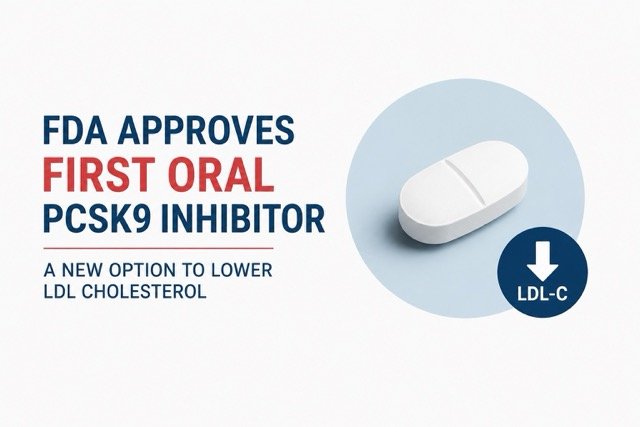
The treatment of high cholesterol has entered a new era. On July 17, 2026, the U.S. Food and Drug Administration (FDA) approved Lipfendra (enlicitide), the world's first oral PCSK9 inhibitor for lowering low-density lipoprotein cholesterol (LDL-C), commonly known as "bad cholesterol."
For the first time, patients who need intensive LDL cholesterol reduction can take a once-daily tablet instead of receiving injectable PCSK9 inhibitors. This approval represents one of the most significant advances in lipid-lowering therapy in recent years and offers a new option for millions of adults struggling to achieve recommended cholesterol targets.
Why Lowering LDL Cholesterol Matters
Elevated LDL cholesterol is one of the strongest modifiable risk factors for cardiovascular disease.
Over time, excess LDL cholesterol deposits within artery walls, forming fatty plaques (atherosclerosis). As these plaques enlarge, they narrow blood vessels and reduce blood flow to vital organs. If a plaque ruptures, a blood clot can rapidly form, leading to:
-
Heart attack
-
Stroke
-
Peripheral artery disease
One of the challenges of high cholesterol is that it usually causes no symptoms. Many people remain unaware they have dangerously high cholesterol until routine blood tests detect it—or worse, until they experience a cardiovascular event.
What Is Lipfendra (Enlicitide)?
Lipfendra (enlicitide) is the first oral medication that inhibits PCSK9 (Proprotein Convertase Subtilisin/Kexin Type 9).
It is approved as an adjunct to:
-
A heart-healthy diet
-
Regular physical activity
-
Standard cholesterol-lowering medications
for adults with:
-
Hypercholesterolemia (high cholesterol)
-
Heterozygous Familial Hypercholesterolemia (HeFH), an inherited form of severe high cholesterol
The medication is taken once daily as an oral tablet, providing a convenient alternative to injectable PCSK9 therapies.
How Does PCSK9 Work?
The liver removes LDL cholesterol from the bloodstream using LDL receptors.
PCSK9 is a naturally occurring protein that binds to these receptors and causes them to be destroyed. When fewer LDL receptors remain, the liver becomes less efficient at clearing LDL cholesterol from the blood.
By blocking PCSK9, enlicitide allows more LDL receptors to survive and recycle back to the liver surface.
The result is:
-
More LDL receptors
-
Greater removal of LDL cholesterol
-
Significantly lower blood cholesterol levels
Clinical Trial Results
The FDA approval was based on two large randomized, double-blind, placebo-controlled clinical trials involving 3,207 adults already receiving maximally tolerated statin therapy.
Trial 1: Patients with Cardiovascular Disease or High Cardiovascular Risk
Participants had:
-
Established atherosclerotic cardiovascular disease (ASCVD), or
-
High risk for ASCVD
Average baseline LDL cholesterol:
96 mg/dL
After 24 weeks:
Lipfendra reduced LDL cholesterol by an average of 56% compared with placebo.
Trial 2: Patients with Familial Hypercholesterolemia
Participants had heterozygous familial hypercholesterolemia (HeFH).
Average baseline LDL cholesterol:
119 mg/dL
After 24 weeks:
Lipfendra lowered LDL cholesterol by an average of 59% compared with placebo.
These reductions are comparable to those seen with currently available injectable PCSK9 inhibitors, making oral therapy a meaningful new option.
Safety Profile
Overall, Lipfendra demonstrated a favorable safety profile.
In patients with cardiovascular disease, adverse events were similar to placebo.
Among patients with familial hypercholesterolemia, the most commonly reported side effects included:
-
Diarrhea
-
Dizziness
Importantly, treatment discontinuation due to side effects was similar between Lipfendra and placebo groups, suggesting good overall tolerability.
Why This Approval Is Important
Until now, PCSK9 inhibitors have only been available as injectable medications.
Although highly effective, injectable therapies may present challenges for some patients because of:
-
Needle anxiety
-
Convenience
-
Storage requirements
-
Adherence to long-term treatment
An oral PCSK9 inhibitor has the potential to improve patient acceptance and long-term adherence while delivering substantial LDL cholesterol reductions.
For clinicians, this expands the range of treatment options for patients who remain above LDL cholesterol goals despite statins and other lipid-lowering therapies.
Who May Benefit?
Lipfendra may be appropriate for adults who:
-
Have persistently elevated LDL cholesterol despite statin therapy
-
Cannot reach recommended LDL targets with current medications
-
Have established cardiovascular disease
-
Have heterozygous familial hypercholesterolemia
-
Require additional LDL cholesterol reduction as recommended by their healthcare provider
Treatment decisions should always be individualized based on cardiovascular risk, current medications, and overall health.
Lifestyle Still Comes First
Even with powerful new medications, lifestyle remains the foundation of cholesterol management.
Evidence-based strategies include:
-
Following a Mediterranean-style or DASH eating pattern
-
Increasing soluble fiber intake
-
Reducing saturated and trans fats
-
Exercising regularly
-
Maintaining a healthy body weight
-
Avoiding smoking
-
Controlling diabetes and high blood pressure
Medication works best when combined with these long-term lifestyle habits.
The Bottom Line
The FDA approval of Lipfendra (enlicitide) marks a milestone in preventive cardiology. As the first oral PCSK9 inhibitor, it offers patients an effective, once-daily alternative to injectable therapies while achieving remarkable LDL cholesterol reductions of approximately 56–59% in major clinical trials.
For individuals with high cholesterol who remain above treatment goals despite standard therapy, this innovation expands the available options for reducing cardiovascular risk. As always, the choice of treatment should be made in consultation with a healthcare professional, taking into account each patient's overall cardiovascular risk profile and treatment goals.