Vitamin B12 deficiency is one of the most common nutritional deficiencies worldwide, particularly among older adults, people with diabetes taking metformin, individuals with gastrointestinal disorders, vegetarians, and patients who have undergone gastric surgery. Untreated deficiency can lead to anemia, nerve damage, memory problems, fatigue, and impaired quality of life.
Methylcobalamin SL (Sublingual) tablets represent an innovative method of vitamin B12 supplementation that combines convenience with effective delivery. Unlike conventional tablets that are swallowed, sublingual tablets dissolve under the tongue, offering a patient-friendly alternative for long-term vitamin B12 replacement.
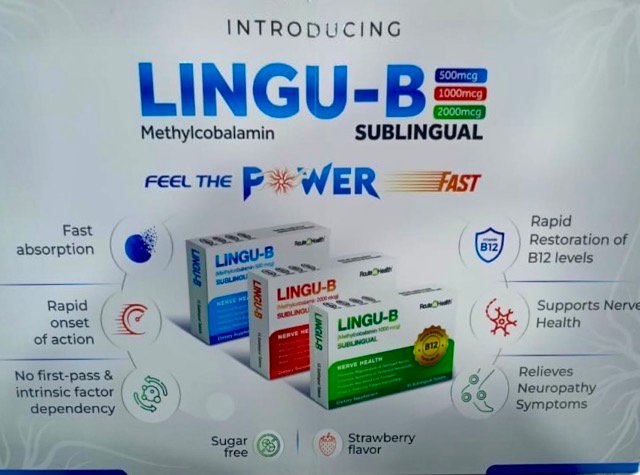
One of the latest additions in Pakistan is Lingu B, a premium sublingual methylcobalamin tablet from Highnoon Laboratories in collaboration with Route 2 Health, available in multiple strengths to meet different clinical needs.
What is Methylcobalamin?
Methylcobalamin is the biologically active form of vitamin B12. It is directly utilized by the body without requiring conversion and plays a vital role in:
- DNA synthesis
- Red blood cell production
- Normal nerve function
- Brain health
- Homocysteine metabolism
- Cellular energy production
Vitamin B12 deficiency may develop gradually and can present with symptoms such as:
- Persistent fatigue
- Tingling or numbness in the hands and feet
- Difficulty walking
- Memory impairment
- Depression
- Glossitis (inflamed tongue)
- Megaloblastic anemia
What Does "SL" Mean?
SL stands for Sublingual, meaning the tablet is placed under the tongue where it dissolves gradually.
This route avoids the need to swallow the tablet and may be particularly convenient for people who have difficulty swallowing medications.
Research suggests that sublingual vitamin B12 raises vitamin B12 levels similarly to conventional oral tablets and, in many patients, performs comparably to intramuscular injections for correcting deficiency.
Who May Benefit from Methylcobalamin SL?
Healthcare professionals may recommend vitamin B12 supplementation for patients with:
- Vitamin B12 deficiency
- Megaloblastic anemia caused by B12 deficiency
- Diabetic neuropathy (as part of comprehensive management)
- Peripheral neuropathy
- Long-term metformin therapy
- Vegetarian or vegan diets
- Older adults with reduced B12 absorption
- Recovery following gastrointestinal surgery
- Chronic gastritis or pernicious anemia (where ongoing medical supervision is essential)
The underlying cause of vitamin B12 deficiency should always be identified and managed appropriately.
Methylcobalamin SL vs Conventional Oral Tablets
| Feature | Sublingual Methylcobalamin | Conventional Oral Tablet |
|---|---|---|
| Administration | Dissolves under the tongue | Swallowed with water |
| Ease of use | Excellent | Good |
| Suitable for swallowing difficulties | Yes | Less convenient |
| Daily convenience | High | High |
| Clinical effectiveness | Comparable in most patients | Comparable in most patients |
Current evidence indicates that sublingual and oral vitamin B12 supplementation produce similar improvements in serum vitamin B12 concentrations in most individuals.
Methylcobalamin SL vs Injectable Vitamin B12
For many years, vitamin B12 injections were considered the standard treatment for deficiency. However, newer clinical evidence has changed this perspective.
| Feature | Sublingual | Injection |
|---|---|---|
| Needle-free | Yes | No |
| Pain | None | Injection discomfort |
| Home use | Yes | Often requires healthcare administration |
| Long-term convenience | Excellent | Moderate |
| Suitable for maintenance therapy | Yes | Yes |
| Useful in severe deficiency | Selected patients | Often preferred initially |
Recent systematic reviews have shown that oral, sublingual, and intramuscular vitamin B12 generally achieve comparable improvements in vitamin B12 levels and homocysteine reduction in many patients. However, injections remain appropriate for severe deficiency, significant neurological symptoms, or when rapid correction is required.
Treatment decisions should always be individualized by the treating physician.
Introducing Lingu B
Lingu B is a sublingual methylcobalamin tablet developed by Highnoon Laboratories / Route 2 Health for convenient vitamin B12 supplementation.
It is available in three strengths:
| Product | Strength | Price per Tablet |
|---|---|---|
| Lingu B | 500 mcg | Rs. 30 |
| Lingu B | 1000 mcg | Rs. 35 |
| Lingu B | 2000 mcg | Rs. 43 |
The availability of multiple strengths allows healthcare professionals to choose an appropriate dose based on individual patient needs and treatment goals.
Advantages of Lingu B
Potential benefits include:
- Active form of vitamin B12 (methylcobalamin)
- Sublingual administration
- Needle-free option
- Available in three convenient strengths
- Suitable for long-term supplementation when prescribed
- Easy to carry and administer
Which Strength Should Be Used?
The appropriate dose depends on the patient's clinical condition and the treating physician's assessment.
General considerations include:
500 mcg
- Maintenance supplementation in selected individuals
- Mild deficiency when clinically appropriate
1000 mcg
- Commonly used for vitamin B12 replacement
- Suitable for many adults requiring supplementation
2000 mcg
- Higher-dose supplementation when clinically indicated
- May be selected by physicians for patients with greater replacement needs
Patients should not self-adjust doses without medical advice.
Is Sublingual Methylcobalamin Better Than Oral Tablets?
Current scientific evidence suggests that sublingual and conventional oral vitamin B12 are similarly effective in most patients. The primary advantages of sublingual tablets are convenience and ease of administration rather than proven superiority in absorption.
Safety
Methylcobalamin is generally well tolerated when used as directed.
Occasionally reported adverse effects include:
- Mild nausea
- Headache
- Skin rash
- Gastrointestinal discomfort
Patients with suspected vitamin B12 deficiency should undergo appropriate medical evaluation before starting treatment, especially if neurological symptoms are present.
Frequently Asked Questions
Is Lingu B a vitamin B12 supplement?
Yes. Lingu B contains methylcobalamin, an active form of vitamin B12, in a sublingual tablet formulation.
How should Lingu B be taken?
Place the tablet under the tongue and allow it to dissolve completely. Follow your healthcare provider's instructions regarding dose and frequency.
Can Lingu B replace vitamin B12 injections?
In many patients with uncomplicated vitamin B12 deficiency, oral or sublingual therapy can be an effective alternative. However, injections may still be recommended in severe deficiency, significant neurological disease, or specific malabsorption conditions.
Who is at higher risk of vitamin B12 deficiency?
People taking long-term metformin, vegetarians, older adults, individuals with gastrointestinal disorders, and patients who have undergone stomach or intestinal surgery are among those at increased risk.
Is Lingu B available in different strengths?
Yes. Lingu B is available as:
- 500 mcg (Rs. 30 per tablet)
- 1000 mcg (Rs. 35 per tablet)
- 2000 mcg (Rs. 43 per tablet)
Conclusion
Sublingual methylcobalamin offers a convenient, needle-free approach to vitamin B12 supplementation. Current evidence indicates that sublingual therapy provides efficacy comparable to conventional oral tablets and, for many patients, can achieve outcomes similar to injectable vitamin B12, while improving convenience and adherence.
Lingu B by Highnoon Laboratories / Route 2 Health expands access to sublingual methylcobalamin in Pakistan with three dosage strengths—500 mcg, 1000 mcg, and 2000 mcg—allowing clinicians to tailor vitamin B12 replacement according to individual patient needs. Patients should consult a qualified healthcare professional for diagnosis, dose selection, and ongoing monitoring of vitamin B12 deficiency.